
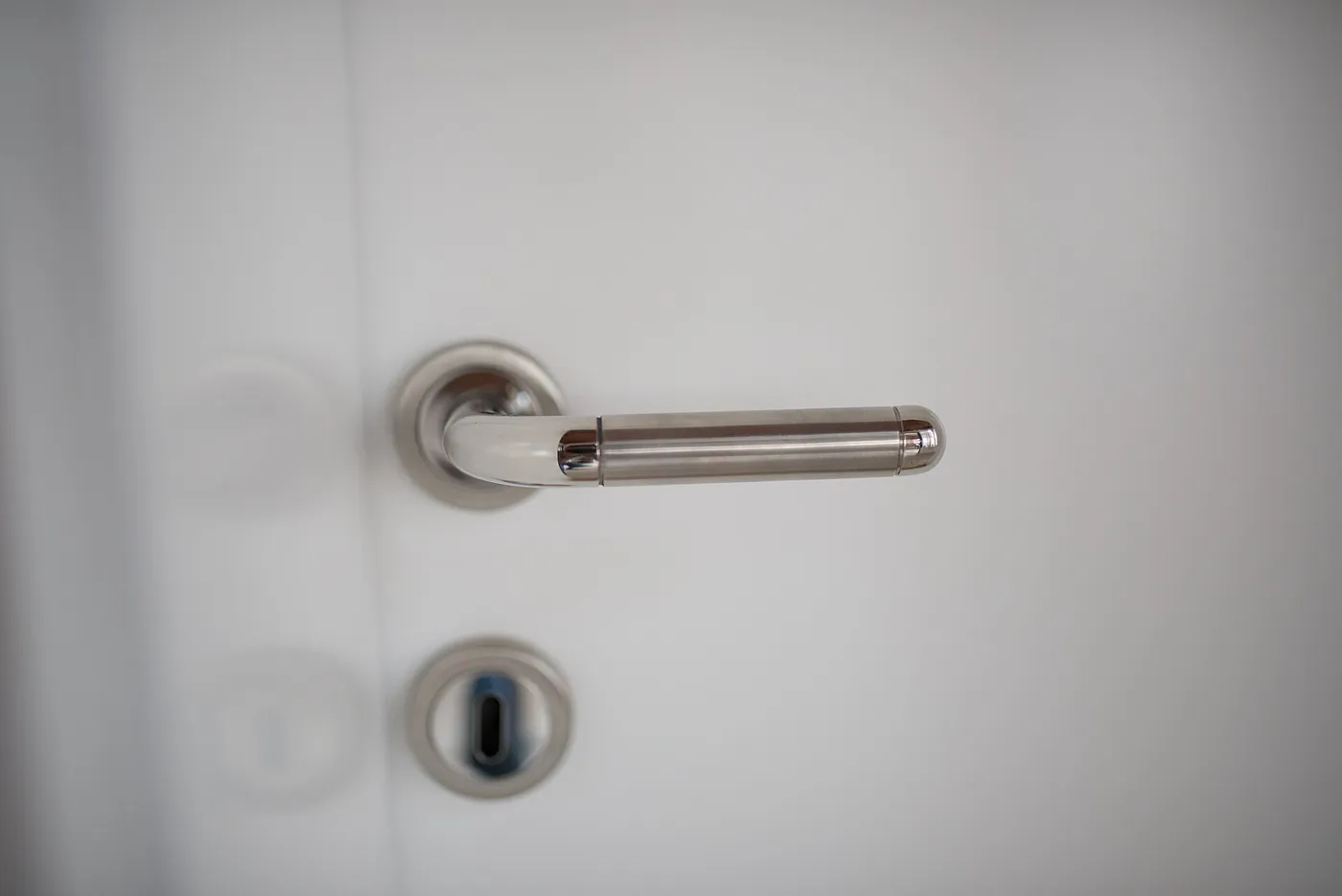
Give each entrance its own job
The door customers use may be very different from the door used for deliveries. Glass storefront hardware, a lever on an interior office, and a rear service entrance should not be treated as one interchangeable lock. Identify the affected entrance and describe whether the trouble is with the key, latch, handle, closer, or the way the door sits in its frame.
A door that does not latch after someone passes through may have an alignment or closing problem rather than a failed key cylinder. Explain what happens during normal operation and whether the behavior changes when the door is held open. Avoid making adjustments that interfere with required exit operation.
Key changes should follow a clear access plan
When a key is lost or staff responsibilities change, decide which doors need new key access. Rekeying suitable locks may address the affected keys without replacing every handle. If several people need different access levels, make a door-by-door list before asking about a master-key arrangement; compatibility and the existing system need assessment.
For leased premises, identify who can authorize changes and whether the landlord controls common entrances. A tenant's suite lock and a shared building door can involve different permissions. Have the responsible contact available so the agreed work matches the part of the property your business controls.
Plan for operation, not just a new key
Broadway is part of Grove City's historic commercial core, where the visible shopfront can be only one part of a business's daily access. Include rear doors, internal storage, and staff-only spaces in your planning when relevant, without assuming all those doors need work at once.
Before approving work, clarify which hardware is included, which keys will stop working, and how the door will be checked afterward. A sensible handover includes confirming the agreed key operation and how the door closes and latches. Any additional building or life-safety concerns should be raised with the appropriate qualified professional or property representative.
A few questions, answered.
Can a lost staff key be addressed without replacing every lock?
Potentially. Suitable cylinders can often be rekeyed, but the affected doors and any existing master-key system need to be identified first.
What should a tenant have ready?
The suite and entrance details, the property manager's authorization requirements, and a clear description of the hardware problem. Do not assume a tenant can authorize changes to shared doors.
Local background: Local reference · Local reference